
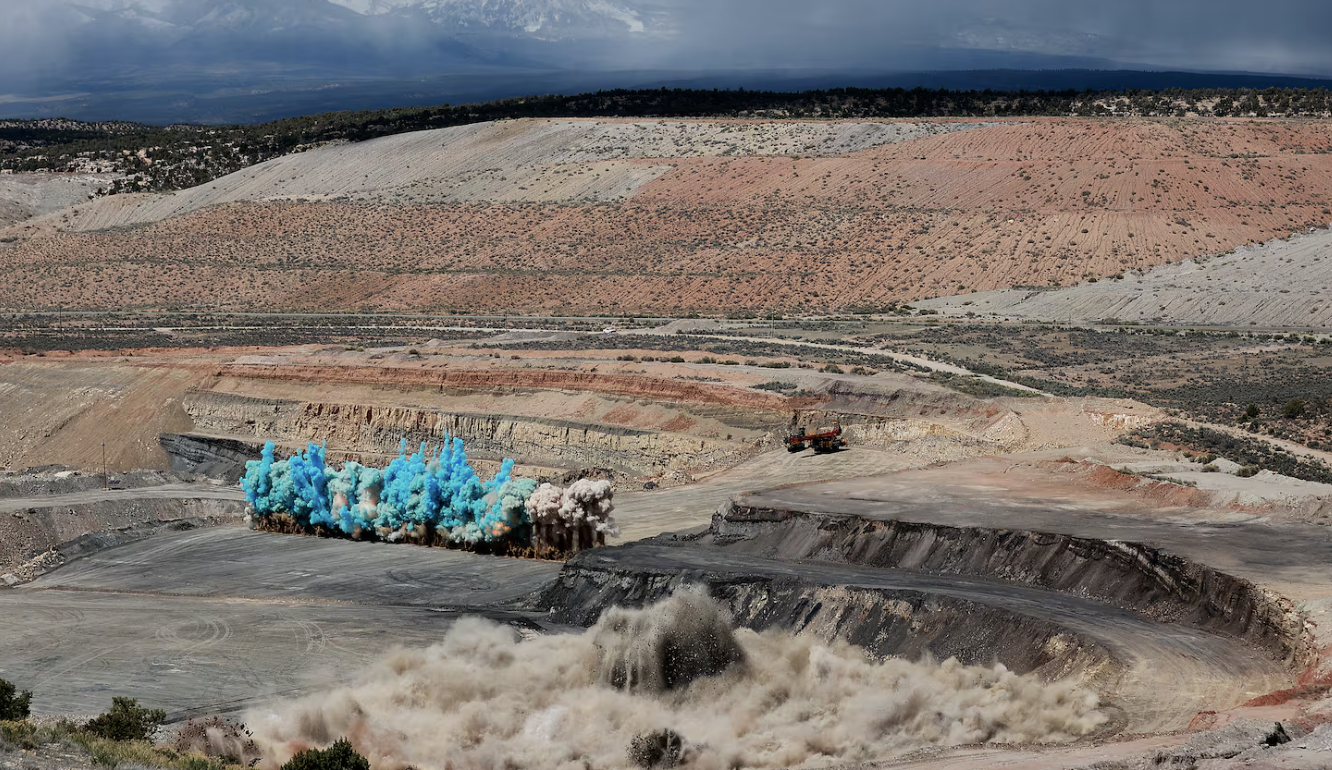
On April 27, a copper mine in southeastern Utah roared back to life — and with it, a powerful reminder of what American ingenuity looks like when government gets out of the way and lets the private sector lead.
Mariana Minerals officially resumed production at its Copper One mine in San Juan County, about 40 miles southeast of Moab. But this isn't just a mine reopening. It's the world's first autonomous copper mine, deploying AI-powered drills, robotic haul trucks, and a private 5G network to fundamentally rethink how we extract the critical minerals our country desperately needs.
The previous operator shut the mine down in 2024 due to rising costs and difficulty finding workers — challenges familiar to rural communities across the West. Mariana's answer wasn't a government program or a bailout. It was innovation. By integrating artificial intelligence and autonomous systems across its operations, the company is cutting mining costs by an estimated 50 percent and refining costs by 30 percent, with plans to produce 50,000 tons of refined copper annually by 2030.
Why Copper Matters Now More Than Ever
The U.S. government has officially designated copper as a critical mineral, and for good reason. Copper is the backbone of modern infrastructure — essential for electrical wiring, renewable energy systems, grid modernization, data centers powering the AI revolution, and national defense. Some analysts estimate the world will need to produce more copper in the next decade than it has over the previous century.
Yet despite having substantial domestic copper reserves, the United States still produces only about half the refined copper it consumes, sending much of its raw material overseas — often to China — for processing. Copper prices have surged past $13,000 per ton in 2026, reflecting a tightening global market and growing demand from every sector of the economy.
Projects like Mariana Minerals' Copper One represent exactly the kind of domestic production capacity we need to build if we're serious about energy independence and supply chain security.
A Lifeline for Rural Utah
The economic impact for San Juan County cannot be overstated. County Commissioner Lori Maughan called the mine's reopening "absolutely" an economic booster, pointing to the tax revenue, jobs, and outside talent the project stands to bring to the region.
Many of the mine's previous employees have already been brought back into the revamped operation. Process operations manager James Gill, who has worked at the site since the early 2000s, said the technological upgrades will allow the company to double its copper output. And the ripple effects — from local spending to new housing demand to ancillary service businesses — will extend well beyond the mine gate.
Free Markets
This is the story of energy and mineral development across the rural West: private investment flowing into communities that need it most, creating real economic opportunity without top-down mandates.
Governor Spencer Cox called the mine's reopening "one of the most important" events in the state's history, praising the convergence of cutting-edge technology and critical mineral production. Utah has been aggressively cutting permitting timelines for energy and mineral projects, and the state legislature passed a concurrent resolution this session to establish Utah as a critical minerals hub.
That's the right approach. When state and federal leaders focus on removing barriers rather than picking winners, the private sector responds. Mariana Minerals has already raised $100 million in venture capital — proof that investors are eager to put money into domestic mineral production when the regulatory environment allows it.
As Caldwell put it, a new generation of entrepreneurs is asking the hard question: "Why can't we do more here?"
At The Western Way, we believe the answer is simple: we can — and we must. Projects like Copper One show that with the right mix of innovation, investment, and sensible policy, America can rebuild its industrial capacity, strengthen its supply chains, and deliver real prosperity to the rural communities that make it all possible.