
Late Thursday night, the U.S. Senate passed the Bipartisan American Affordability and Jobs Act (BAAJA) by a vote of 62–33. Fourteen Democrats and one independent joined most Republicans to send the bill to the House. After years of false starts, Congress is closer than it has been in a generation to fixing the way America permits the infrastructure that powers our economy.
That matters everywhere. But it matters most in the West.
A Western-led, bipartisan bill
BAAJA was written by the leaders of the two Senate committees that oversee energy and environmental permitting: Senators Shelley Moore Capito (R-WV) and Sheldon Whitehouse (D-RI), and Senators Mike Lee (R-UT) and Martin Heinrich (D-NM). Two of the four lead authors represent Western states, and it shows. The bill reflects a simple reality that Westerners have understood for years: when it takes a decade to approve a transmission line or a geothermal well, families and businesses pay the price.
The Western Way has long argued that the best energy policy lets markets work, respects private property and state leadership, and treats every resource fairly. BAAJA moves federal policy meaningfully in that direction.
What the bill does
It makes environmental review faster and more predictable. BAAJA keeps the National Environmental Policy Act (NEPA) intact as a disclosure law, but puts it on a clock. Agencies get 60 days to decide whether an application is complete and 60 more to decide what level of review it needs. Environmental assessments are generally due within one year and full environmental impact statements within two, with one lead agency coordinating the process. Agencies can reuse credible past analysis for ten years instead of five, and the number of routine activities excluded from lengthy review roughly doubles.
It gives approved projects certainty. Today, a project can win its permits and still face a lawsuit filed up to six years later. BAAJA cuts that window to 150 days, requires challengers to have actually participated in the public process, and directs courts to send flawed reviews back to agencies for correction rather than tearing up the permit. Once a permit is lawfully issued, agencies cannot simply rescind it for political reasons. That certainty is what private investors need to finance large projects at a reasonable cost.
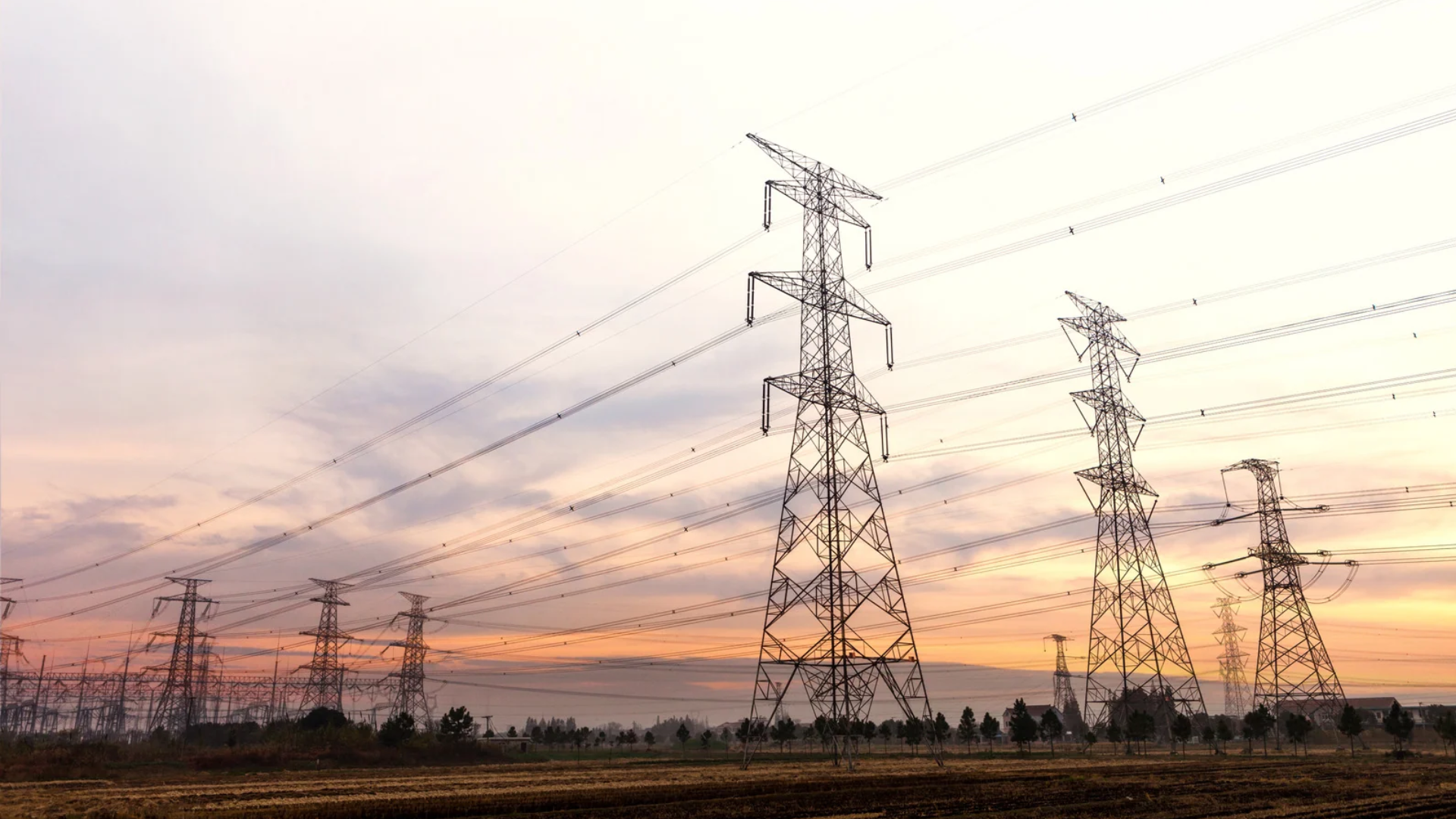
It finally takes transmission seriously. BAAJA is the strongest federal transmission package Congress has considered since 2005. It requires regional and interregional grid planning, allows the Federal Energy Regulatory Commission to act as a backstop for major interstate lines after states have had a year to act, and exempts upgrades on existing lines, like reconductoring, from duplicative review. Costs are assigned to the customers who benefit from a line, and customers who receive no benefit pay nothing.
It treats all energy resources fairly. Wind, solar, storage, natural gas, nuclear, geothermal, pipelines and transmission are all covered. Permitting decisions should turn on the law and the merits of a project, not on which technology an administration happens to favor.
Why it matters for the West
Federal land is our backyard. The federal government manages roughly 80 percent of Nevada and more than 60 percent of Utah and Idaho, with large shares of Wyoming, Arizona and Colorado as well. In much of the Interior West, almost no major energy project can be built without a federal permit. BAAJA requires the Bureau of Land Management and the Forest Service to rule on whether solar, wind, geothermal and storage applications are complete within 30 days, and it creates new streamlined pathways for power lines in already-designated energy corridors. For Western states, federal permitting reform is not abstract. It is the difference between projects that get built and projects that die in a filing cabinet.
Geothermal gets a real opening. The West holds most of the nation's geothermal resources. BAAJA sets deadlines for geothermal drilling permits and streamlines exploration wells, helping a homegrown, around-the-clock resource compete on a level playing field.
Our grid needs to grow, and fast. Western utilities are facing load growth not seen in decades, from new manufacturing, population growth and data centers. Moving that power across our wide-open states depends on long-distance transmission, and BAAJA removes some of the biggest obstacles to building it.
Ratepayers are protected. Rapid data center growth has raised a fair question: who pays for the new infrastructure? BAAJA answers it. For large new loads of 20 megawatts or more, the bill prohibits shifting the incremental costs of serving them onto other customers and requires upfront financial assurance. Growth should pay for growth, not land on the bills of Western families and small businesses.
States keep their seat at the table. BAAJA gives states a year to act on transmission applications before any federal backstop applies, allows qualified state environmental reviews to count toward federal review, and lets qualified states take on certain Endangered Species Act responsibilities. The bill gives FERC no new authority over retail rates or local distribution. That is the right balance between federal coordination and state leadership.
Not perfect, but a real step forward
No bill of this size gives every stakeholder everything they want, and BAAJA is the product of hard-fought compromise between both parties and both committees. But the status quo, where approvals take years, lawsuits linger for a decade and good projects in every energy sector stall, is failing Western communities. BAAJA is the most serious attempt in years to fix it.
What comes next
The bill now goes to the House, where its path is less certain and the calendar is short. The Western Way urges our House delegations in Arizona, Colorado, Idaho, Nevada, Utah and Wyoming to support BAAJA and get it to the President's desk before this Congress ends. The West has waited long enough to build.