
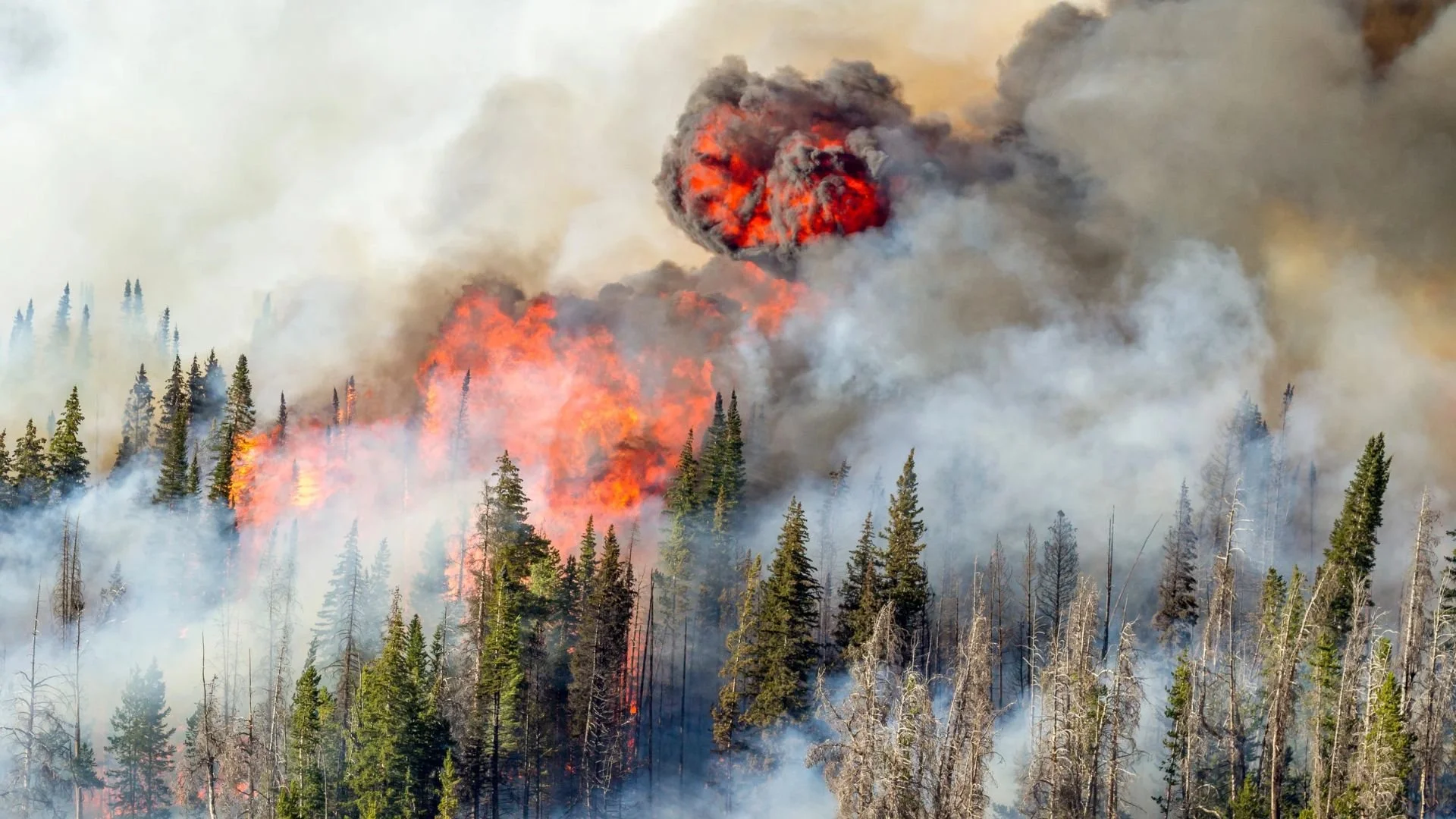
For Montana Senator Tim Sheehy, wildfire isn't an abstraction. In a recent interview on RFD-TV, highlighted this week by the Western Caucus Foundation as part of its Champions of Rural America series, Sheehy described fire burning over his wife's family farm a couple of years ago, and the many fires he has fought on the family's farm and ranch over the years. Rural Westerners, he said, understand that wildfire "threatens our livelihoods and our homes."
That's why he and a bipartisan group of Western senators are pressing for a vote on the Fix Our Forests Act (S. 1462). And it's why The Western Way is adding our voice: the bill is ready, the need is urgent, and the Senate should pass it before this Congress ends.
The Fix Our Forests Act started in the House with Rep. Bruce Westerman (R-Ark.), a trained forester, and Rep. Scott Peters (D-Calif.). It passed the House 279–141 in January 2025.
The Senate companion was negotiated by a distinctly Western team: Sens. John Curtis (R-Utah), John Hickenlooper (D-Colo.), Tim Sheehy (R-Mont.) and Alex Padilla (D-Calif.). In October 2025, the Senate Agriculture, Nutrition, and Forestry Committee advanced it on a strong bipartisan 18–5 vote.
Then it stalled. More than a year later, the bill is still waiting for time on the Senate floor, while another fire season has come and gone.
What the bill actually does
The core problem is simple: our federal forests are overgrown, and the process to treat them is too slow. Research cited by the bill's supporters finds it takes the Forest Service more than five years, on average, to complete a full environmental review before forest work can even begin. Fire doesn't wait five years.
The Fix Our Forests Act would:
Target the highest-risk landscapes. It designates high-priority "firesheds" and gives agencies tools to treat them at the scale the threat demands, with an emphasis on working across ownership boundaries.
Cut the paperwork for proven work. It expands categorical exclusions for wildfire resilience projects such as fuel breaks, letting thinning and fuels reduction move forward without years of duplicative review.
Reduce litigation gridlock. It reforms how and when lawsuits can halt projects, so critical treatments aren't tied up in court for years.
Expand prescribed fire and fuels treatment to reduce risk before a fire starts, not after.
Improve coordination through a new Wildfire Intelligence Center to help agencies share data and make faster decisions.
Give locals a bigger role. As Sen. Sheehy put it, the bill gives private landowners and state and local governments more of a say in wildfire prevention, putting decisions closer to the people who know the land best.
Why this matters for Western energy
At The Western Way, we focus on market-driven energy policy and responsible development across Arizona, Colorado, Idaho, Nevada, Utah and Wyoming. Forest health is energy policy.
Transmission lines, distribution networks and generation facilities run through and alongside fire-prone federal lands. Every catastrophic fire puts that infrastructure, and the reliability of the grid, at risk. It also drives up wildfire liability and insurance costs that ultimately land on ratepayers. That's why rural electric cooperatives have backed the bill as a way to protect their infrastructure and the communities they serve, and why insurance industry groups joined a broad coalition this month urging Congress to pass it before the end of 2026.
The same lesson we apply to energy permitting applies here: when it takes years to get approval for common-sense work, the risk doesn't sit still. Streamlining review for well-understood, beneficial projects isn't cutting corners. It's governing at the speed the problem requires.
Some conservation groups argue the bill goes too far in limiting environmental review. We take stewardship seriously, which is exactly why we support this bill. Nothing degrades a forest, a watershed or wildlife habitat like a megafire. The status quo of slow approvals and endless litigation has not protected our forests; it has left them primed to burn. The Fix Our Forests Act earned support from a coalition that includes foresters, sportsmen, counties, utilities and environmental organizations precisely because it finds common ground.
The Fix Our Forests Act has passed the House. It has cleared committee. What it needs now is floor time. We urge Senate leadership to schedule a vote before the year ends, and we urge every Western senator to support it.
Wildfire won't wait. Neither should Congress.