
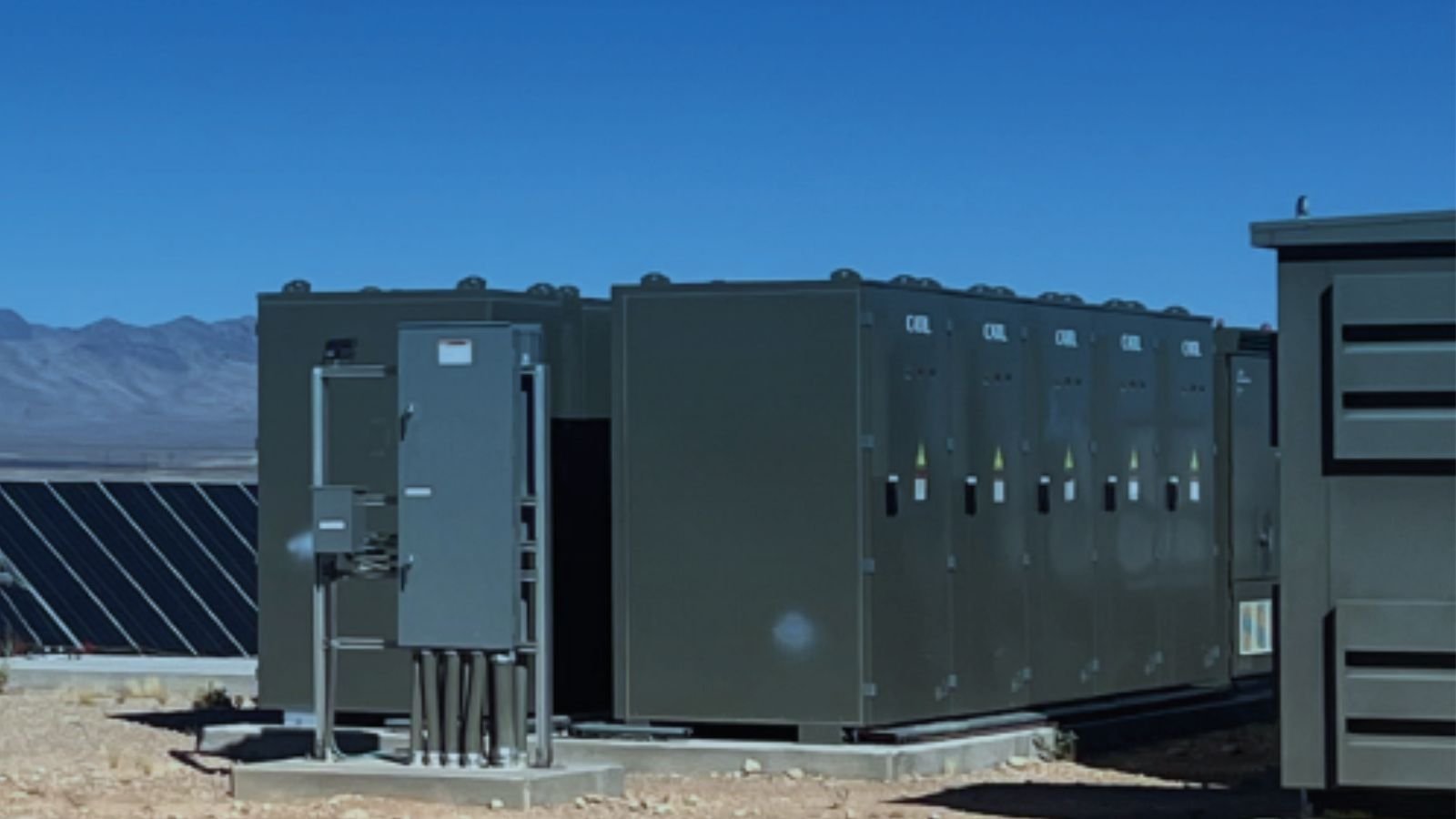
The numbers are in, and the energy storage market just had its biggest year ever.
According to the latest US Energy Storage Monitor from Wood Mackenzie, the United States installed a record 18.9 gigawatts of energy storage in 2025 — a 52 percent increase over the prior year. In total, more than 50 gigawatts of storage capacity has been deployed nationwide since 2019, driven by declining costs, strong market signals and growing demand for reliable power.
This matters for anyone who cares about keeping the lights on.
As we documented in our recent Red State Reliable report, the most reliable power grids in America aren't built on a single energy source — they're built on a diverse mix of generation and storage working together. Battery storage is a critical part of that equation, giving grid operators more tools to manage peak demand, smooth out intermittency and keep electricity affordable.
The growth is no longer concentrated in just a handful of states. Utility-scale storage was installed across 22 states in 2025, signaling continued regional diversification well beyond California and Texas. That's the "all of the above" strategy playing out in real time — private capital deploying storage where the economics make sense, from the Southwest to the Southeast and everywhere in between.
Looking ahead, Wood Mackenzie projects the U.S. will install roughly half a terawatt-hour of new storage capacity between 2026 and 2031 — two and a half times what was deployed in the previous six years. Annual installations are expected to surpass 28 gigawatts by 2031, with utility-scale storage growing an average of 16 percent per year.
The biggest risk to that trajectory? Policy uncertainty. The report flags ongoing questions around supply chain rules, trade barriers and permitting delays as key variables that could swing future deployments by as much as 52 gigawatts in either direction. That's a powerful reminder that market momentum alone isn't enough — smart, stable policy matters too.
Energy storage isn't a niche technology anymore. It's a foundational piece of America's grid infrastructure, and the market is scaling it faster than almost anyone predicted. The question for policymakers isn't whether to support storage — the market has already answered that. The question is whether Washington will keep up.